
Set up a DVR, ou stand-alone, to be accessed remotely is no big deal, but for those who have no experience below follows a step by step tutorial on how to set up your stand-alone to view your cameras from anywhere that has internet access.
1º Step: Check the information of your network
click in Start > run > type it CMD e de enter.
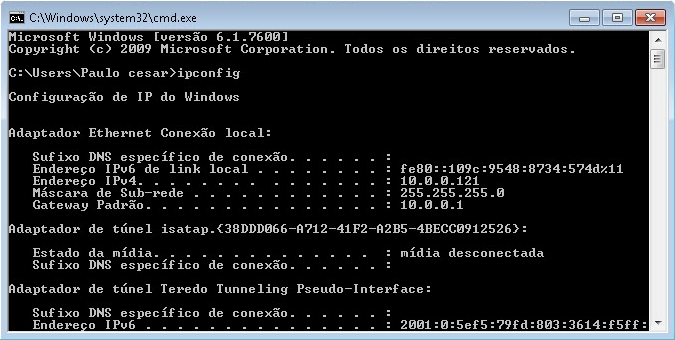
No Command prompt which opened type ipconfig e de enter.
Record the following information for later use:
- Subnet Mask
- default Gateway
2º Step: Configurar o stand-alone (internal and external access)
As there are several models the way to configure each DVR may vary, but the premise is the same.
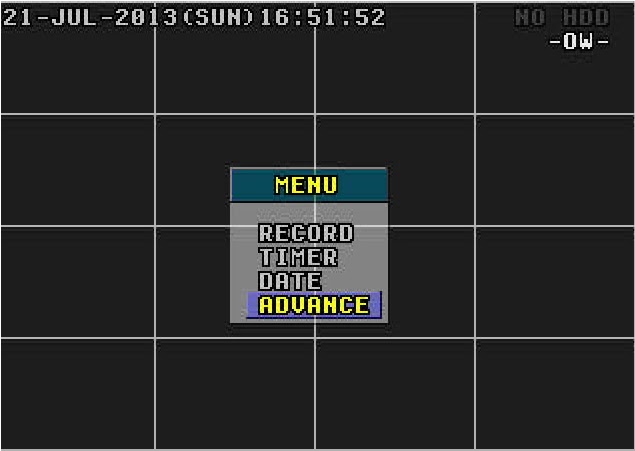
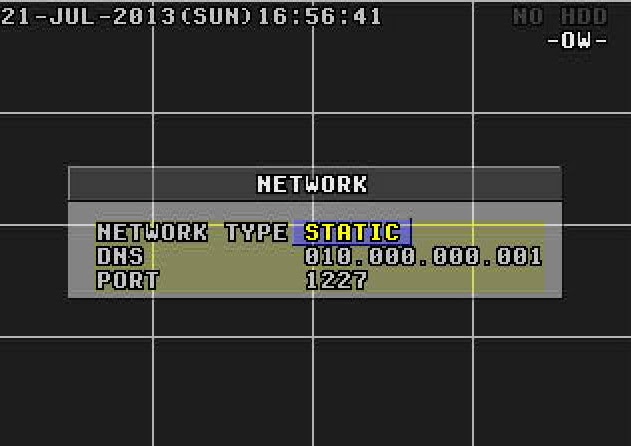
Menu > Advance > Network
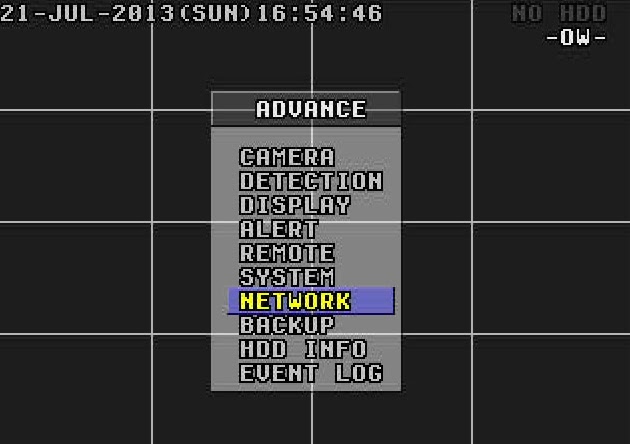
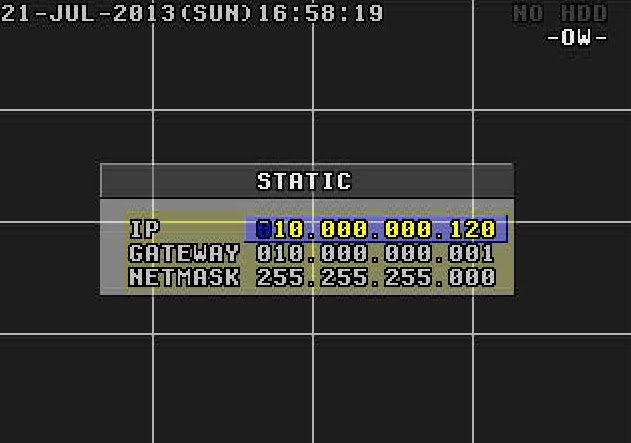
In Network Type, of O.k in Static and put the information picked up from the computer.
IP: You prefer. ( Example: 10.0.0.120)
Gateway: 10.0.0.1
Netmask: 255.255.255.0
Go back to the Menu Network.
DNS: 10.0.0.1 (the same gateway)
Port: It is the gateway to access your DVR. In this example I'll use port 1227, but you can use the number of your choice.
Obs.: If what you want is internal access, that you can view the cameras from any computer or device that is connected to your internal network, already done you don't need to configure anything else. To view the cameras simply enter your internet browser and enter the following address: http://ip-stand-alone:door (Ex: http://192.168.0.120:1227)
3º Step: Fix external IP
In almost all internet services available, our external IP is not fixed, and yes dynamic, ie every time your router is turned off or disconnected the next made it to connect with your Internet service will be with a different IP. Then this problem, to access the stand-alone we need to know the external IP current network it is connected, since it is not feasible to go to the place where the stand-alone is physically to check the IP address every time the router is turned off we will use a service that updates the IP automatically.
The two most commonly used are the No-IP e o DynDNS, both are paid but the No-IP has the ability to upgrade for free up to three IP addresses per account, for this reason I will use the No-IP for demonstration, but in both the configuration is basically the same.
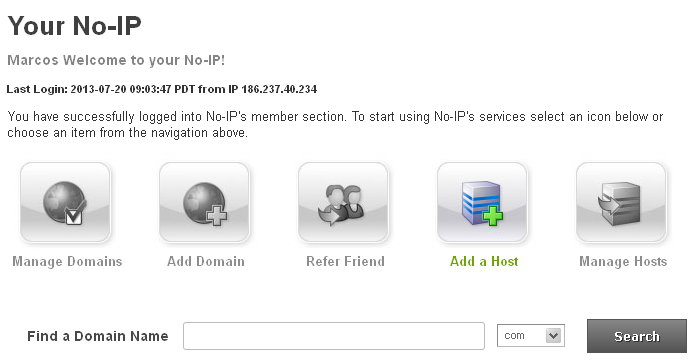
First create an account at No-IP, after that enter the account created and click “Add Host”.
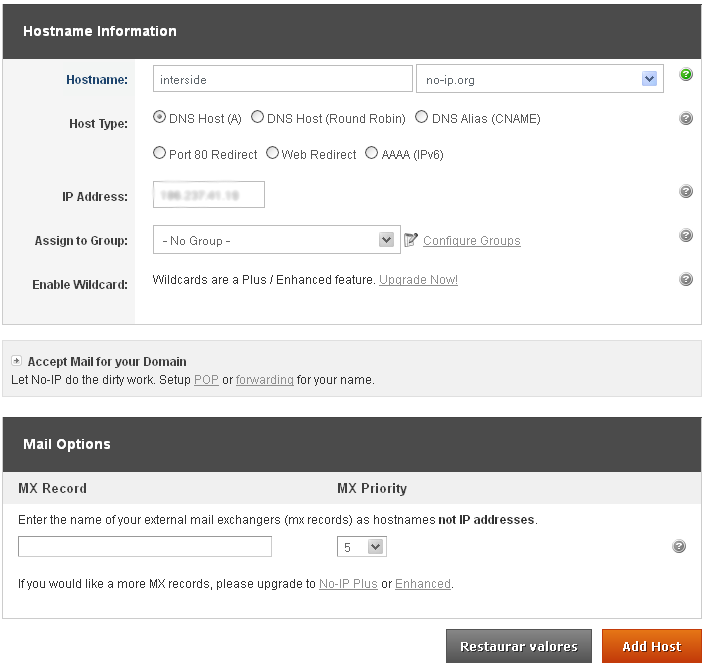
On the next page choose “Hostname” I had used to access your DVR, do not change anything and click “Add Host” at the bottom.
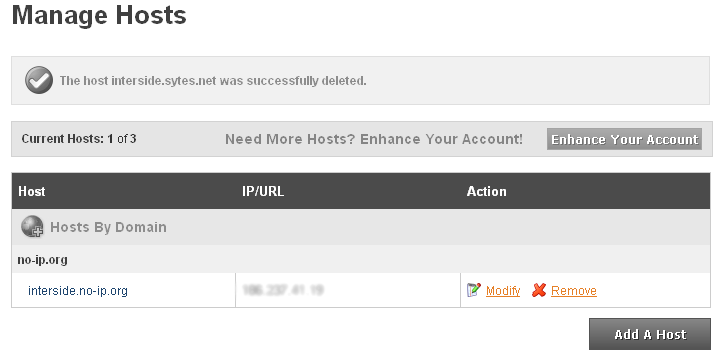
ready your hostname it is created.
4º Step: Configure the router:
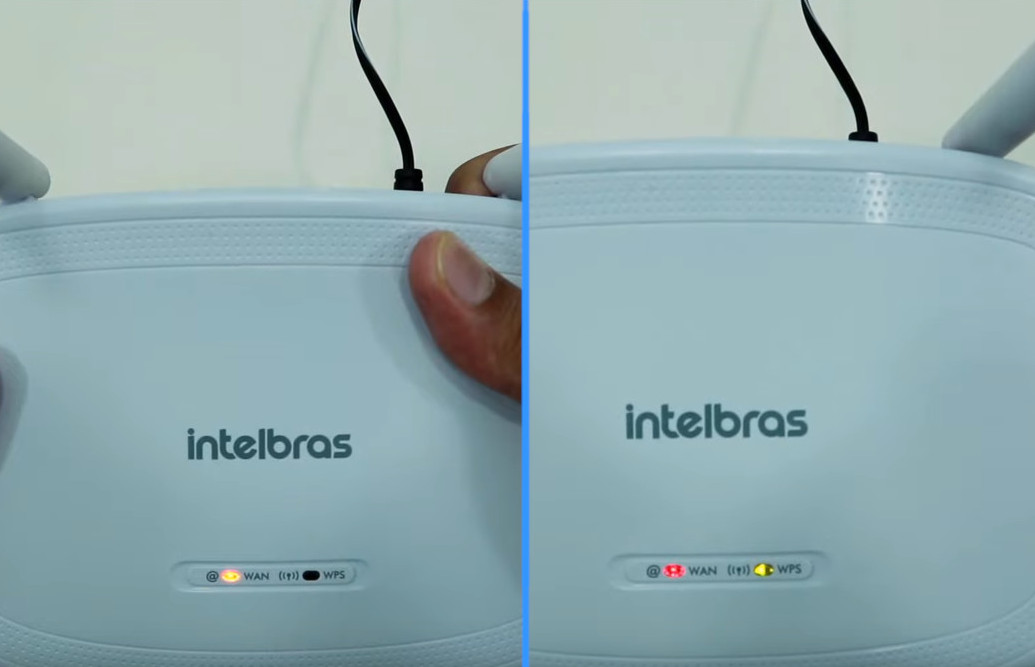
Now what we do is to set the IP and the stand-alone door. The router I'm using in this tutorial is the “WRN 240” gives Intelbras, but the configuration is basically the same for any router.
First you go redirection > Virtual server > Add
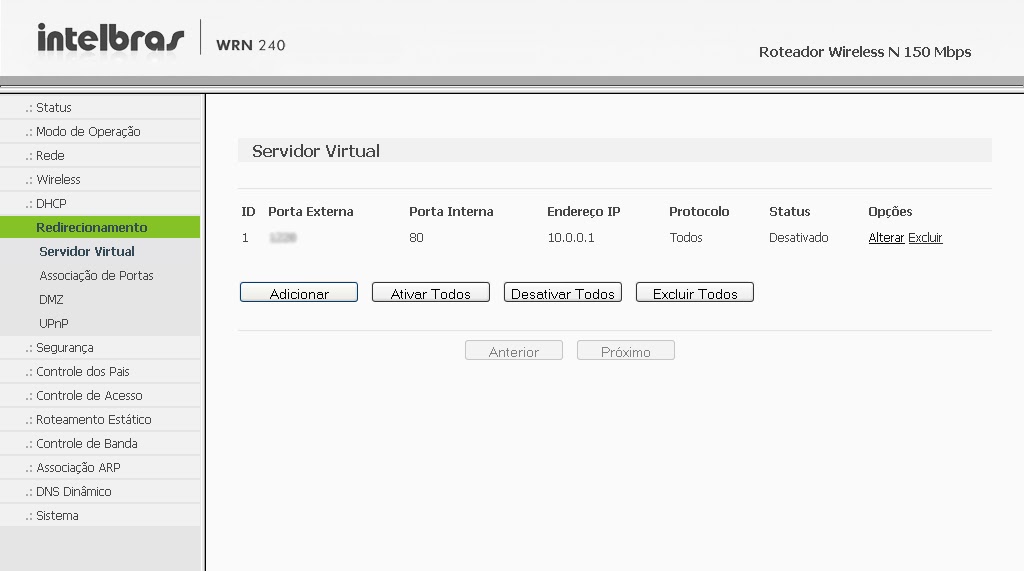
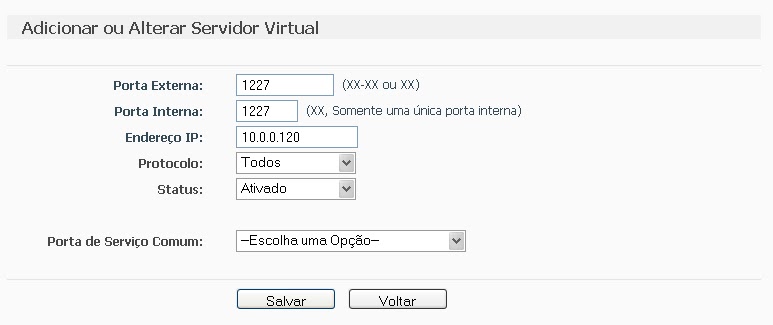
Place the information of the DVR and click save.
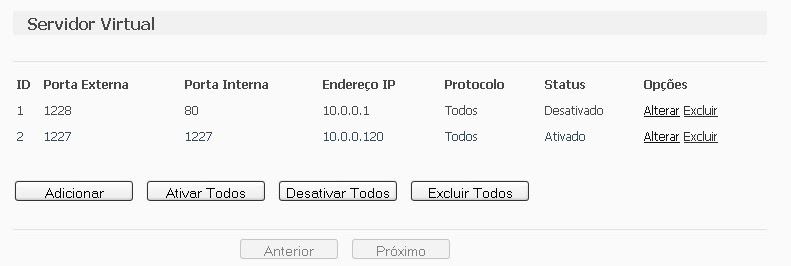
after saving, the port and IP that you set will look like this:
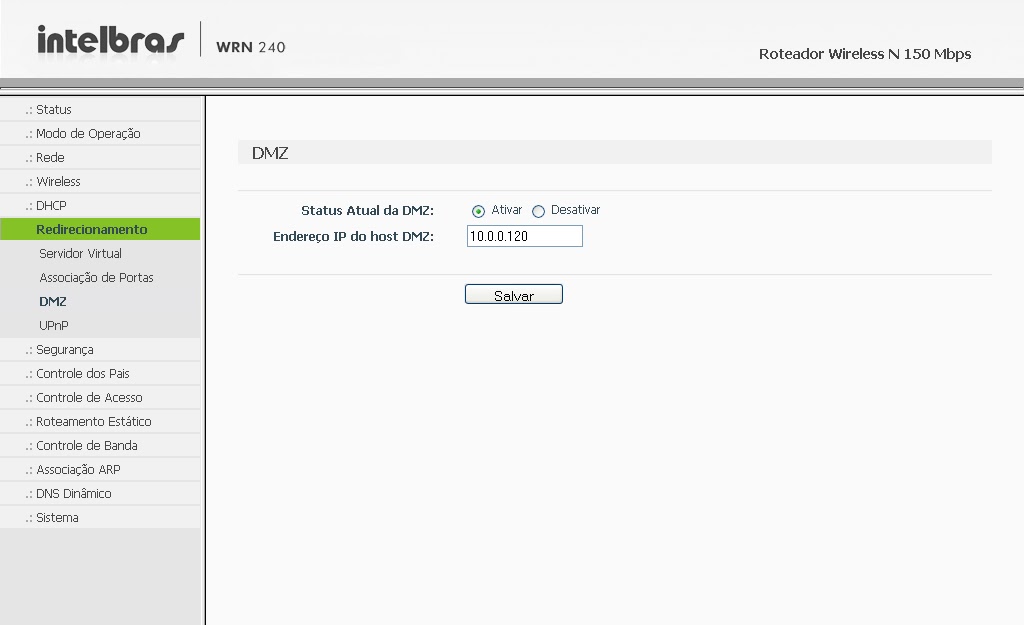
 Some people prefer to make the release of the DMZ ports, as it will be shown abaixo, but by enabling DMZ on your modem or router, you will be compromising the security of your device. Always release the doors manually, as shown above..
Computer security, a DMZ or demilitarized zone (demilitarized zone or DMZ), also known as perimeter network, is a physical or logical subnet that contains and exposes an organization's external border services to a larger, untrusted network, usually internet. Any devices located in this area, this is, between the trusted network (usually the local private network) and the untrusted network (usually the Internet), is in the demilitarized zone.
redirection > DMZ > Select enable, enter the IP of the DVR and save.
The next step is to configure the router to automatically update your network's IP in your NO-IP account.
Go to Dynamic DNS, enter your account information and the hostname/domain you created, click enter. After the “Connection Status” is like “Connected!” click save.
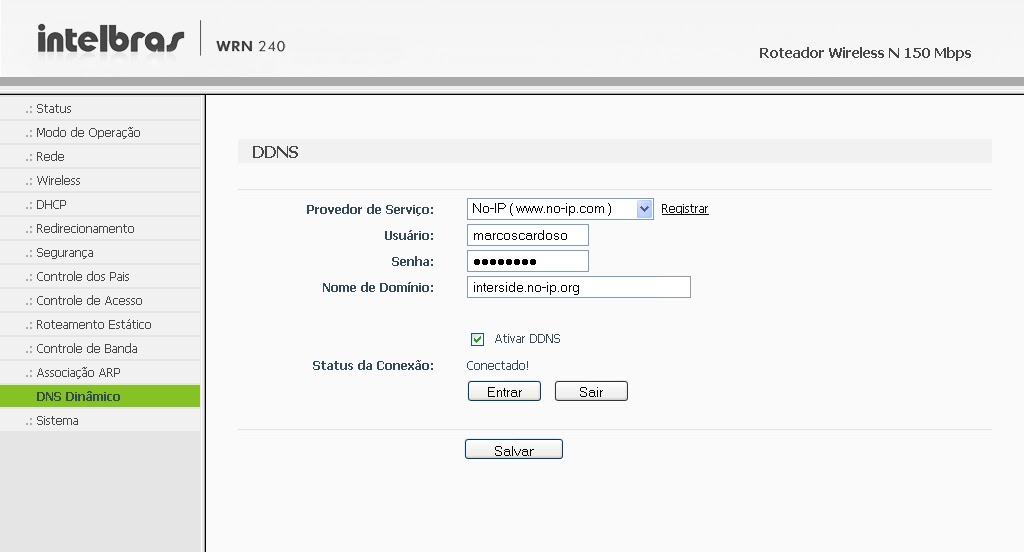
It is, Now you can view your cameras from anywhere in the world.
If you have questions or suggestions leave us comments.



321 Comments
"Anonymous", Most DVRs have different ports for browser access and cell phone access.
You have to configure both ports on the DVR and the router.
Cardoso, In other words, this device does the opposite of what you would need and in short, it wouldn't work unless the DVR was WiFi. That's what he explained to me ?
Abs
I have an H.264 DVR, I can access it remotely through the browser, but I discovered that to access via cell phone it is necessary to use a router. With this step-by-step guide for installing the router, I will be able to access it via cell phone with the apk installed.? Or do I still need some additional configuration??
Edmond, From the looks of it, this device supports WiFi, transmits via Wifi and takes cable and transfers to wifi.
It doesn't receive WiFi and transmits via cable.
God in heaven they want to charge me 250,00 to configure my dvr, please someone help me: face book: https://www.facebook.com/guto.maluquinho?fref=ts
Cardoso, so the device I mentioned in the post doesn’t do this. ?
Good morning Edmond!
The difference between the repeater and the amplifier is that normally the amplifier only picks up the WiFi signal, amplifies and redeploys over WiFi. And this DVR probably doesn't have the option to connect via WiFI.
A good option is to buy a router with the "universal repeater" option" and install it on the DVR. This way it will pick up the WiFi signal and pass it to the DVR via cable. You can find this type of router for less than R$70.00.
Any questions we are there.
A hug.
Hello Cardoso and everyone, This is my first post on this blog because this is where I'm finding the answers I need.
My problem is the following:
My brother moved apartments and had hired someone to install cameras around the apartment (because of my nephews, to be able to see remotely how the person who takes care of the little ones behaves). Very well, he even installed the cameras (a total of 3 or 4 by fit) and did all the cabling that goes behind the DVR, In other words, the cameras are wired directly to the DVR. But since my sister-in-law and my brother didn't go along with the person, I was asked to continue installing everything..
The first thing I did before messing with the DVR, was to disable the WiFi on the Internet modem (the signal was horrible) and pass the Wan to the Router so that it sends the WiFi signal to the apartment. The Router is a D-link DIR-645. I did it and everything worked fine and the signal range is reaching the entire apartment..
The problem: He now wants to turn on the DVR and start the cameras, but the DVR is far from the router and it doesn't want to run cables. The guy who was installing it said he would need a signal amplifier, those that plug into the socket which I "suppose" is like this one: http://produto.mercadolivre.com.br/MLB-557356616-repetidor-extensor-wifi-amplificador-sinal-preto-wireles2013-_JM
So my question is, What is the difference between a repeater and an amplifier since this device does both. Another thing, I will have to connect an RJ45 from the DVR to this device to be able to get the signal from the router ? This is correct ?
Initially my doubts are these for now.
I count on the help of colleagues.
Abs
Junior
Marks, try to use the plugin in firefox. As soon as I can, I'll get on Skype so we can talk..
Engel, you will have to ask your network technician to direct the ports to your IP. And try to configure No-IP on your DVR, and remove from the router.
After the technician directs the ports to your IP and you configure the ports on your router directing to the DVR, you will have to test the ports. Follow the link to a website to test open ports: http://ping.eu/port-chk/